
What Really Changes When You Replace Missing Teeth
Missing teeth can affect much more than your smile. Chewing certain foods gets tricky, words do not sound as clear, and you might hold back from laughing in photos or joining in at social events. Over time, this can chip away at comfort and confidence in quiet ways.
The good news is, you have strong options for replacing those teeth. Modern dentures and dental implants look natural, feel more secure than many people expect, and can fit into different lifestyles. If you are thinking about dentures in Mount Laurel, NJ, or wondering if implants are worth it, it helps to know what really changes from day to day.
In this post, we are sharing a simple, side-by-side look at implants and dentures, focused on stability, speech, chewing power, and bone health. We want you to understand how each choice feels in real life, not just in dental terms. At our office, we take a calm, personal approach, using comfortable technology and taking time to get to know you, so your solution fits you and not the other way around.
Stability You Can Count on All Day Long
Traditional dentures rest on top of the gums. Upper dentures usually rely on suction to stay in place, and lower dentures mostly sit on the ridge of bone with help from your cheeks and tongue. Some people use adhesives to feel more secure, which can mean reapplying during the day and worrying about slipping at the wrong moment.
Dental implants work differently. Small posts are placed in the jawbone where tooth roots used to be. Once healed, they hold single crowns, bridges, or implant-supported dentures. Because they are anchored in bone, they tend to feel more like natural teeth. You can talk, laugh, and eat without the same worry about movement.
Day to day, that can mean fewer little hassles, like:
- Less time fussing with adhesive
- Less fear of dentures shifting while you eat or talk
- Fewer surprise slips when you cough or sneeze
- More freedom to relax in social settings
For dentures, careful planning is still the key to good stability. At our Mount Laurel office, we use digital imaging and detailed measurements to design dentures that hug your gums as closely as possible. When same-day technology is appropriate, it helps us plan with more precision so your dentures start out with a snugger fit and need fewer big changes later.
Talking, Laughing, and Smiling Without Self-Consciousness
Missing teeth or loose dentures can make clear speech harder. Some people notice a whistle on certain sounds, a slight lisp, or feel like they need to keep their lips tighter when they speak. That can lead to pulling back in meetings, staying quiet on video calls, or avoiding small talk at gatherings.
Both well-made traditional dentures and implant-supported options can greatly improve speech. There is usually an adjustment period, because your tongue has to learn its way around the new shape in your mouth. For most people, this improves over days or weeks as the brain and muscles adapt.
Day-to-day moments that often feel easier include:
- Reading out loud to kids or grandkids
- Giving a toast or saying a few words at a party
- Chatting on the porch with neighbors on a warm evening
- Speaking up in work meetings without worrying about teeth shifting
We know this part can feel awkward at first. At Friendly Smiles Center, we build in time for try-ins where you test the way your teeth come together, your smile, and how words feel. We listen closely to your feedback, make gentle adjustments, and coach you with simple tips so you feel supported, not rushed, while you get used to speaking with your new teeth.
Chewing Comfort and Enjoying the Foods You Love Again
Missing teeth or worn dentures can really limit what you eat. Biting into crisp apples, corn on the cob, crusty bread, grilled vegetables, or a juicy steak can feel scary or painful. Many people start avoiding their favorite foods or cutting everything into tiny pieces, which can take away some joy from meals.
Traditional dentures help restore chewing, but they do have limits. Because they sit on the gums, the pressure spreads over soft tissue. This can lower bite force and sometimes cause sore spots, especially when dentures are new or when they start to loosen with time.
Implants and implant-supported dentures usually offer stronger, more stable chewing power. Since the bite pressure travels down through the implants into the bone, it often feels closer to chewing with natural teeth. That can make it easier to enjoy a wider range of foods with less worry.
We like to set realistic expectations:
- Well-made dentures can let you enjoy many foods again, with some care
- Implants usually feel more solid and natural while chewing
- Both options may require some changes in how you bite and chew
- Soreness early on often improves with adjustments and time
For dentures in Mount Laurel, NJ we design each set to match your bite, not just your smile. We check how your upper and lower teeth meet, adjust high spots, and smooth any areas that rub. Follow-up visits are an important part of our process, so we can fine-tune the fit and help keep mealtimes comfortable instead of stressful.
Hidden Benefit: Protecting Your Jawbone and Facial Shape
Something many people do not hear about right away is what happens to the jawbone after teeth are lost. Natural tooth roots send tiny signals to the bone whenever you bite and chew. Without those roots, the bone does not get the same message and can slowly shrink over time. This can make the face look more sunken and can change the way dentures fit.
Dental implants act like replacement roots. When you chew with implant-supported teeth, the implants press on the bone, which helps keep it more active and supported. This may help maintain facial fullness and keep dentures or bridges more stable over the long term.
Traditional dentures sit on top of the gums and do not give the bone that same kind of stimulation. That does not mean they are a bad choice, but it does mean the mouth will change shape over the years. To keep up with that, we recommend:
- Regular checkups to watch bone and gum changes
- Relines to adjust the inside of the denture when it loosens
- Replacing very old dentures that no longer match your jaw shape
- Talking with us about whether implants could help support future dentures
At our office, we use digital imaging to gently walk you through what is going on under the surface. Seeing your own bone and sinuses on a screen can make this less scary and more understandable, so you feel confident about your long term plan, whatever you choose.
Choosing Your Best Option with a Neighborly Dental Team
There is no single right answer for everyone when it comes to implants versus dentures. The best choice depends on your health, your daily routine, your budget, and how you want your smile and bite to feel. For some people, traditional dentures are a great fit. For others, a mix of implants and dentures offers the best mix of comfort and stability.
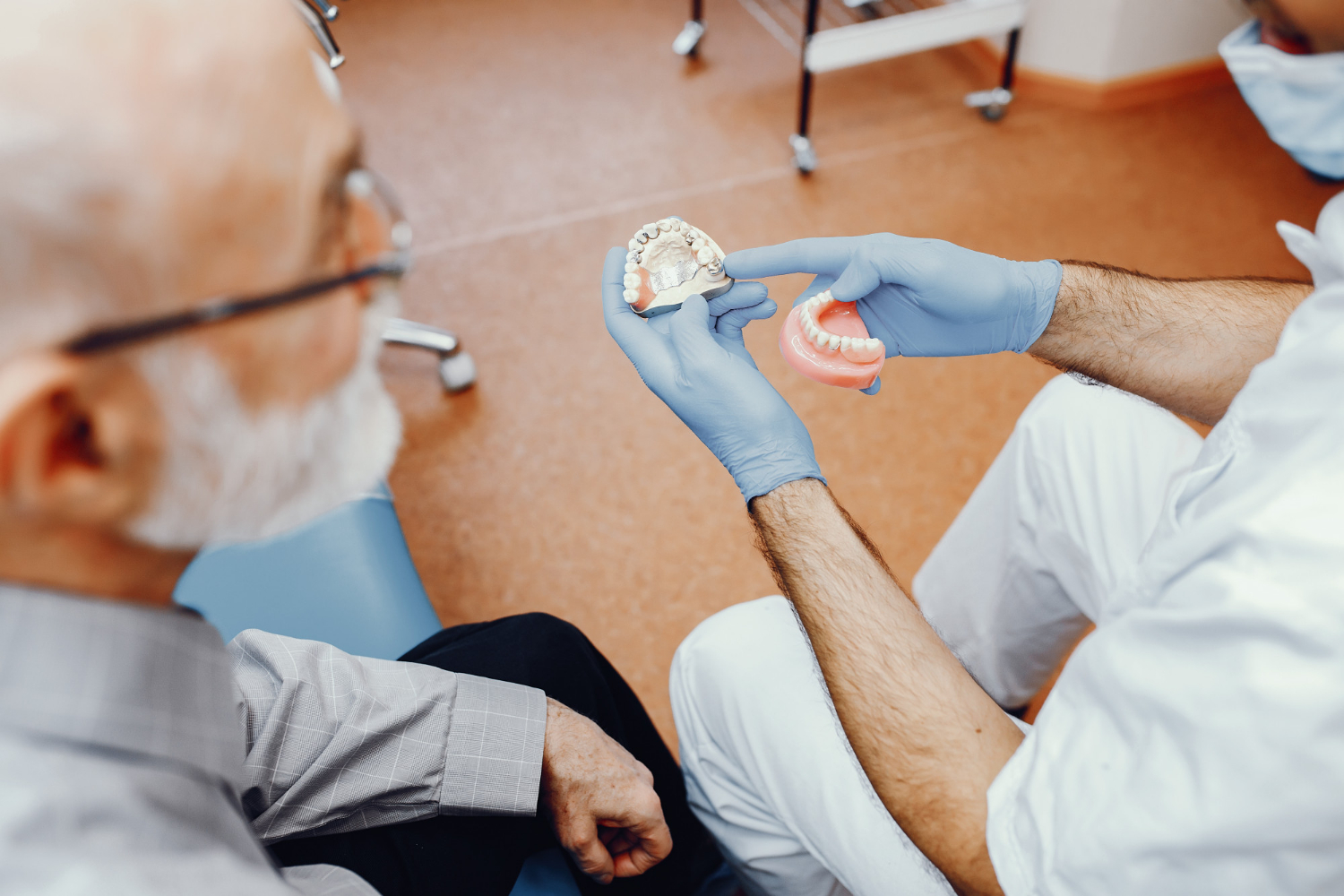
A visit with our team in Mount Laurel feels more like a conversation than a lecture. We take time to hear your worries, your goals, and even the things you are afraid to say out loud, like fear of pain or past bad experiences. We explain options in simple terms, show you images so you can follow along, and talk about comfort choices that can help ease anxiety in the chair.
Whether you lean toward dentures, implants, or a blend of both, our goal at Friendly Smiles Center is to be your long term partner. We want you to feel at ease eating, speaking, and smiling day after day, season after season, with teeth that fit your life and let you enjoy the moments that matter.
Restore Comfort and Confidence With a Personalized Denture Solution
If you are ready to eat, speak, and smile with confidence again, our team is here to help you explore your options for dentures in Mount Laurel, NJ. At Friendly Smiles Center, we take time to understand your goals so we can recommend the approach that fits your needs, lifestyle, and budget. Contact our team through our contact page to schedule your visit and take the next step toward a more comfortable, natural-looking smile.